
MINI Museum Mallnitz
Special Exhibition at the BIOS National Park Center in Mallnitz
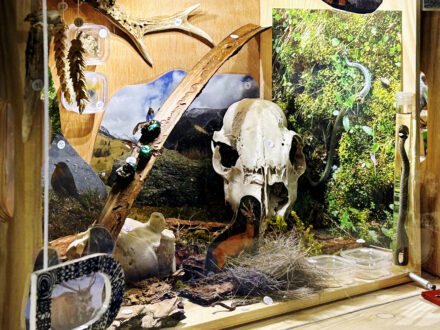
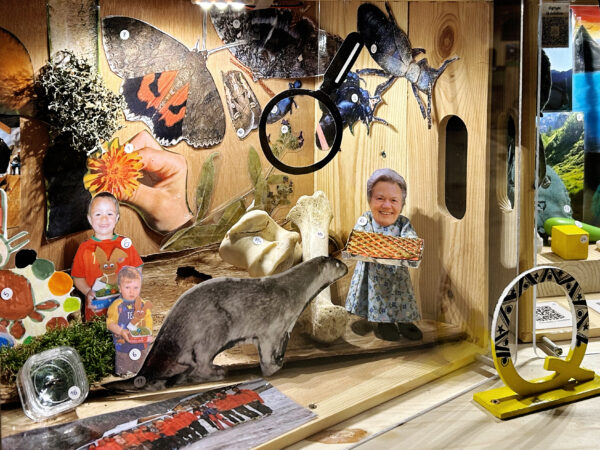
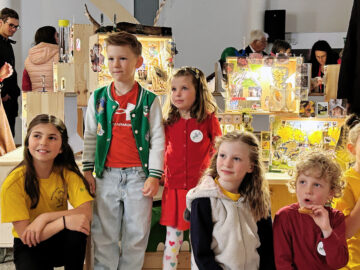
Under the motto «Little Hands—Big Treasures,» the MINI Museum was officially opened on April 27, 2024, in the Tauernsaal in Mallnitz. Numerous guests of honor and visitors were able to see for themselves how intensively and consistently the children of the Tauernzwerge National Park Kids’ Group, as well as the students from the Mallnitz Elementary School and the Obervellach Middle School, had worked over the course of more than a year. In the MINI Museum, they showcase their discoveries from the natural and cultural world of the national park region in 26 treasure chests, arranged in alphabetical order.
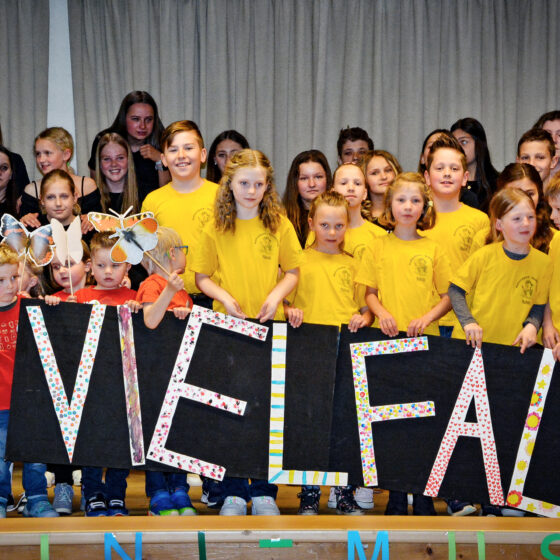
Project
In April 2023, VS Mallnitz and the Tauernzwerge preschool began collecting NP specimens. These included feathers, rocks, snail shells, insects, and more. A herbarium was also started. In the fall of 2023, MS joined the effort. Over the winter months, the specimens were carefully studied and identified in our research corners as well as in the NPHT’s ranger labs. Together, we then discussed how to organize the finds to create a «mini-museum,» which will be open to the public starting in April 2024 in the auditorium or at the visitor center. By involving the MS STEM class, which focuses on biology, we were also able to cover the fields of technology and computer science. For example, information was expanded to include video clips, models, and websites. The result is a MINI-Museum that presents the children’s finds—ranging from an eagle feather to a dragonfly exuvia to a Swiss stone pine cone—in an innovative and entertaining way. The project also incorporated hands-on and creative elements. As a result, children ages 4–14 engaged independently and in an interdisciplinary manner with their surroundings—the NPHT—and future visitors to the NP Visitor Center will get to see the NPHT through the eyes of children and young people—an innovation that did not exist until now. The project could easily be adapted for use in other national parks, biosphere reserves, and nature parks. The MINI-Museum could, of course, also go on tour.
- Children and students are familiar with the basics of inquiry-based learning
- Children and students are familiar with the treasures of nature and their local environment (NPHT)
- Children and students can classify exhibits and identify some of them
- Children and students can describe their habitat
Organization & Info
European Center for Climate and Environmental Education (EKUZ)
Mag. Gudrun Batek
Mallnitz 11
9822 Mallnitz
Competency Model
Using the GECKO platform, the competency model describes the skills that learners can acquire as part of the project.
Downloads & Resources
All content as well as learning and teaching materials are licensed as Open Educational Resources (OER) under the Creative Commons license CC BY-NC-SA 4.0 and may only be shared or edited under the following three conditions: Attribution – Non-commercial – Redistribution under the same conditions.
Highlights



Funding Agency
The initiative was supported and facilitated as a project within the Educational Innovation Lab for Sustainable MINT (EIL4MINT) at the Educational Lab. EIL4MINT is funded by the Innovation Foundation for Education and implemented as part of the FFG program«Innovation Labs for Education.»
Co-funding organizations:
, Lakeside Science & Technology Park GmbH, University of Klagenfurt, Carinthia Department of Education, Carinthia University of Teacher Education, Carinthia University of Applied Sciences
